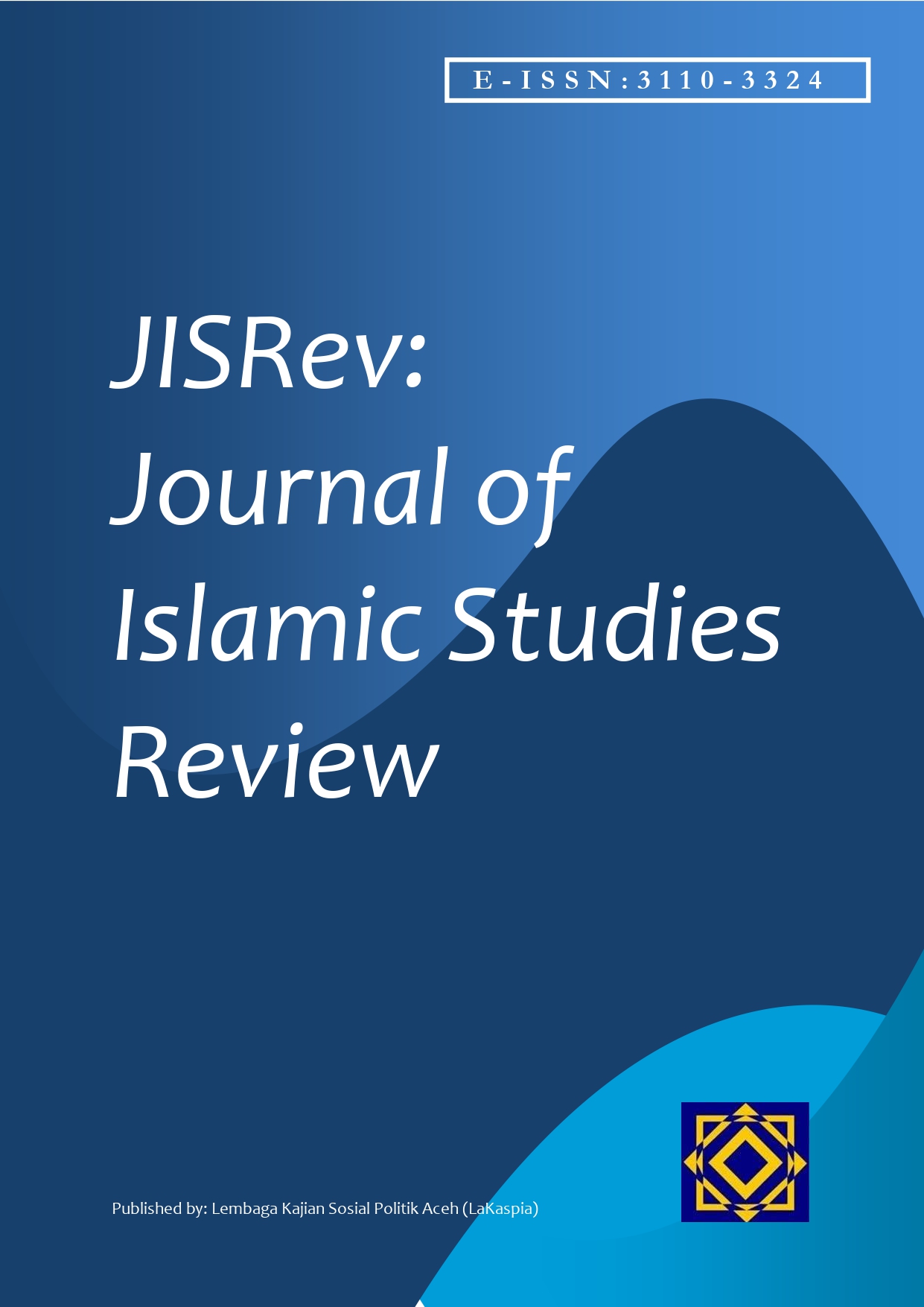
Model Pembelajaran PAI Berbasis Project-Based Learning untuk Penguatan Profil Pelajar Pancasila
Abstract
This study developed an Islamic Religious Education (PAI) learning model based on Project-Based
Learning (PjBL) to strengthen students' Pancasila Student Profile. Driven by the importance of
character education and innovation in PAI learning, PjBL was chosen for its effectiveness in
facilitating active learning and the internalization of Pancasila values. This research employed a
Research and Development (R&D) approach using the ADDIE model, involving teachers and students,
and collected data through observation, interviews, questionnaires, and documentation. The data
were then analyzed qualitatively and quantitatively. The results showed that the developed PAI
learning model based on PjBL has high validity, practicality, and effectiveness, proven to be able to
improve PAI understanding and significantly strengthen the dimensions of the Pancasila Student
Profile, such as belief in God Almighty and noble character, independence, cooperation, global
diversity, critical reasoning, and creativity. This model is recommended as an innovative reference for
PAI teachers to shape student character.

References
Abdul Aziz, F., & Dan Tantangan Implementasi Profil Pelajar Pancasila Pada Pembelajaran Pendidikan Agama Islam Studi Kasus Di SMA Negeri, S. (2025). ARTICLE INFO ABSTRACT motivation, and infrastructural constraints (mosque renovation). Jurnal Penelitian Dan Evaluasi Pendidikan, 12(3), 222–231. https://journal.nuspublications.or.id/jpep
Dewi, L., & Fauziati, E. (2021). Pembelajaran Tematik di Sekolah Dasar dalam Pandangan Teori Konstruktivisme Vygotsky. In Jurnal Papeda (Vol. 3, Number 2).
Dyah Aryani, W., Purwanti, E., Siroj, S. A., Taufiq, R., & Wahab Wayudi, A. (n.d.). Penerapan Model Pembelajaran Collaborative Learning Dalam Pendidikan Agama Islam (PAI). https://doi.org/10.59818/jpi.v5i4.1741
Fauzan, F., Ansori, R. A. M., Dannur, Moh., Pratama, A., & Hairit, A. (2023). The Implementation of the Merdeka Curriculum (Independent Curriculum) in Strengthening Students’ Character in Indonesia. Aqlamuna: Journal of Educational Studies, 1(1), 136–155. https://doi.org/10.58223/aqlamuna.v1i1.237
Ginting, R. P., Wicaksana, E. J., & Natalia, D. (2024). The effect of PjBl model on creative thinking ability and higher-order cognitive outcomes in high school. JPBI (Jurnal Pendidikan Biologi Indonesia), 10(3), 1148–1160. https://doi.org/10.22219/jpbi.v10i3.34820
Hamzah, A., Soraya, I., & Kurjum, M. (2025). DESAIN BAHAN AJAR BERMUATAN NILAI-NILAI ISLAM MELALUI MODEL PEMBELAJARAN BERBASIS PROYEK: KAJIAN TEORITIS DAN PRAKTIS. TAJDID: Jurnal Pemikiran Keislaman Dan Kemanusiaan, 9(1), 227–245. https://doi.org/10.52266/tadjid.v9i1.4302
Kartiwan, C. W., Alkarimah, F., & Ulfah. (2023). Peran Guru Pendidikan Agama Islam dalam Mewujudkan Profil Pelajar Pancasila. Jurnal Imiah Pendidikan Dan Pembelajaran, 7(2), 239–246. https://doi.org/10.23887/jipp.v7i2.59576
Kusumawati, I. T., Soebagyo, J., & Nuriadin, I. (2022). Studi Kepustakaan Kemampuan Berpikir Kritis Dengan Penerapan Model PBL Pada Pendekatan Teori Konstruktivisme. In Mathematic Education Journal)MathEdu (Vol. 5, Number 1). http://journal.ipts.ac.id/index.php/
Moh Ickhamal Suryadinata, A., Penelitian, A., Kunci, K., Ceramah, M., Agama Islam, P., Metode Ceramah, K., & metode cermah, K. (2025). Metode Ceramah Dalam Pendidikan Islam (Keuntungan dan Keterbatasannya) The Lecture Method in Islamic Education (its Advantages and Limitations). Jurnal Kolaboratif Sains, 8(6), 3458–3467. https://doi.org/10.56338/jks.v8i6.7674
Mubin, N., Amin Nur, M., & Arif Ma, R. (n.d.). Implementasi Kurikulum Merdeka pada Pendidikan Agama Islam untuk Peningkatan Mutu Pembelajaran. Retrieved http://Jiip.stkipyapisdompu.ac.id
Downloads
Published
How to Cite
Issue
Section
License
Copyright (c) 2026 Najma Farah Diana Kamila, Mohammad Imam Arifin, Huswatul Hasanah, Ahmad Fuad Abdul Baqi (Author)

This work is licensed under a Creative Commons Attribution-NonCommercial-ShareAlike 4.0 International License.
This work is licensed under a Creative Commons Attribution-NonCommercial-ShareAlike 4.0 International License. Under this license, you are free to copy and redistribute the material in any medium or format, and remix, transform, and build upon the material. However, you must give appropriate credit, you may not use the material for commercial purposes, and if you remix or transform the material, you must distribute your contributions under the same license as the original.